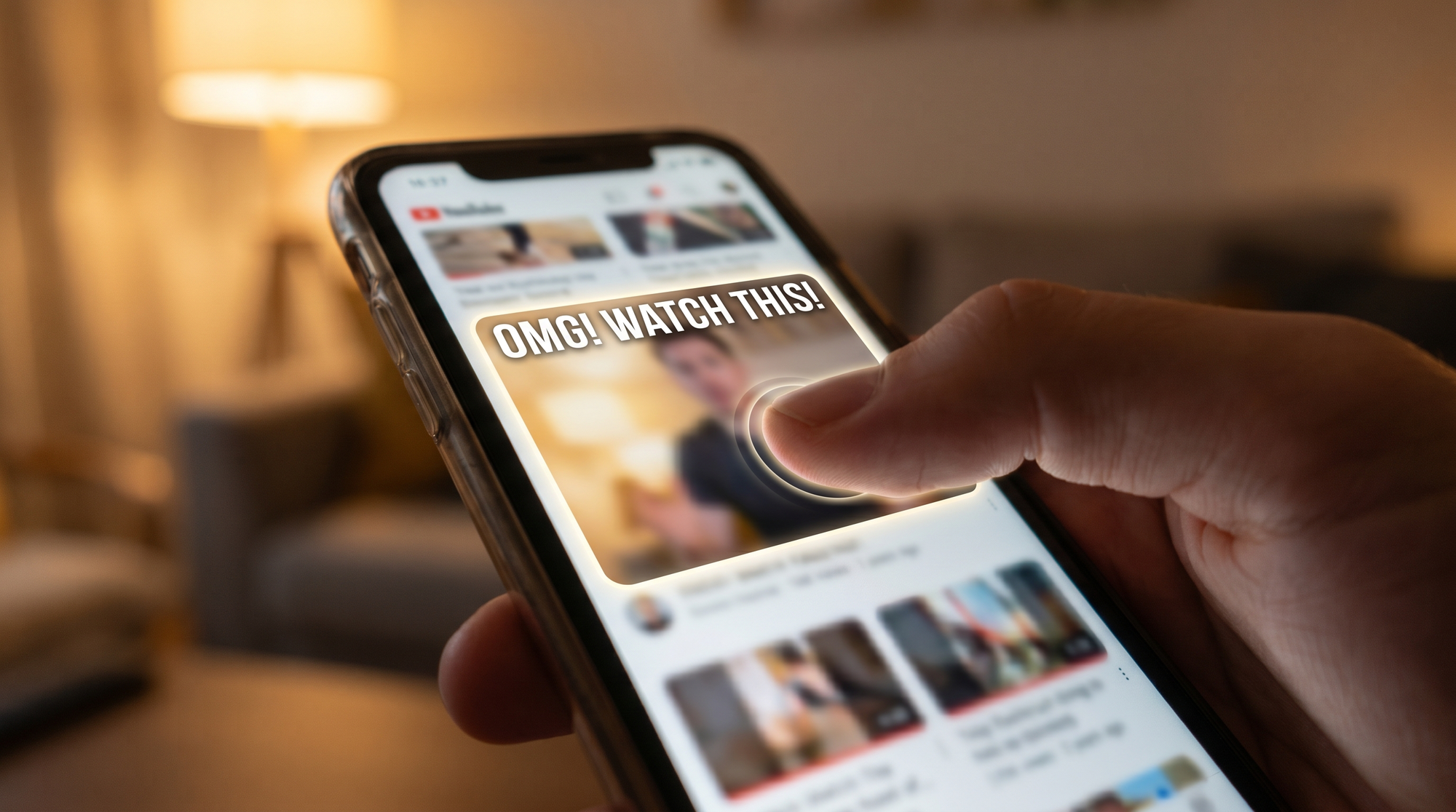
The first two seconds of your ad determine whether it works or wastes money. On Meta and TikTok, users scroll at a speed that gives your creative roughly 1.5 to 2 seconds to earn attention. If the hook fails, nothing else matters. Not the product, not the offer, not the landing page. The ad simply never gets seen. In 2026, with CPMs rising and creative fatigue accelerating, the brands winning on paid social are the ones systematically producing and testing hook variations at a pace that manual teams cannot match. This guide breaks down the five hook frameworks that consistently drive the highest 2-second view rates and CTR, shows you platform-specific benchmarks, and explains how AI-powered creative tools turn hook testing from a quarterly exercise into a weekly advantage.
Table of Contents
- Why the hook is the only metric that matters first
- The five hook frameworks that perform in 2026
- Platform-specific hook benchmarks
- Hook testing at scale: Manual vs AI
- Building a hook testing system
- Common hook mistakes that kill performance
- How Larven generates winning hooks automatically
- Frequently asked questions
Key Takeaways
| Point | Details |
|---|---|
| 2 seconds decide everything | If your hook does not stop the scroll in 1.5 to 2 seconds, the rest of your ad is invisible. |
| 5 proven hook frameworks | Question, bold claim, before/after, social proof, and curiosity gap consistently outperform. |
| Hooks are platform-specific | What stops the scroll on TikTok often underperforms on Meta, and vice versa. |
| AI enables volume testing | Testing 10 to 20 hook variations per week is only practical with AI-powered creative tools. |
Why the hook is the only metric that matters first
Every ad metric you care about, CTR, CPC, CPA, ROAS, is downstream of a single moment: did the user stop scrolling? The 2-second view rate (also called the thumb-stop rate) is the leading indicator that predicts all other performance metrics. A high thumb-stop rate means your creative entered the consideration set. A low one means it was invisible regardless of how good the product, offer, or landing page behind it was.
On Meta, the average 2-second view rate for ecommerce ads sits between 25% and 35%. Top-performing creatives hit 40% to 55%. On TikTok, where scroll speed is faster, the equivalent metric (2-second view rate on in-feed ads) averages 20% to 30%, with top performers reaching 35% to 45%.
The gap between average and top-performing hooks is not marginal. It is a 2x difference in the number of people who actually see your ad. That 2x compounds through every stage of the funnel. Twice the views means roughly twice the clicks, twice the add-to-carts, and twice the purchases, all from the same ad spend.
Pro Tip: Before optimizing anything else in your campaign, check your 2-second view rate. If it is below 30% on Meta or below 25% on TikTok, the problem is the hook. No amount of audience or bid optimization will fix a creative that does not stop the scroll.
The five hook frameworks that perform in 2026
After analyzing thousands of ecommerce ad creatives across verticals, five hook structures consistently produce the highest thumb-stop rates and CTR. Each works differently, and the best-performing brands rotate between all five to prevent hook fatigue.
1. The question hook. Opens with a direct question that targets a specific pain point or desire. Forces the viewer to mentally answer, which creates a micro-commitment that keeps them watching. Example structure: "Still paying $X for Y when you could Z?"
2. The bold claim hook. Leads with a specific, quantified statement that challenges expectations. The claim must be bold enough to trigger curiosity but credible enough to avoid skepticism. Example structure: "This $29 product replaced my $200 routine."
3. The before/after hook. Shows a transformation in the first 2 seconds, either visually (split screen, time-lapse) or verbally ("I used to X, now I Y"). This works especially well for beauty, skincare, fitness, and home categories where the result is visible.
4. The social proof hook. Opens with third-party validation: a review quote, a "sold out 3 times" claim, or a visible number ("47,000 five-star reviews"). Social proof hooks work by borrowing trust from the crowd, reducing the viewer's need to evaluate the product independently.
5. The curiosity gap hook. Creates an information gap that the viewer can only close by watching. This is the "I can't believe nobody talks about this" or "The thing your dermatologist won't tell you" structure. Effective but must be used carefully to avoid feeling clickbaity, which triggers negative engagement signals on both platforms.
| Hook framework | Average 2-second view rate (Meta) | Average 2-second view rate (TikTok) | Best for |
|---|---|---|---|
| Question | 35% to 45% | 28% to 38% | Problem-aware audiences, pain point products |
| Bold claim | 38% to 50% | 30% to 42% | Value proposition, price disruption |
| Before/after | 40% to 55% | 32% to 45% | Transformation products, beauty, fitness |
| Social proof | 33% to 42% | 26% to 35% | Established products with review volume |
| Curiosity gap | 36% to 48% | 30% to 40% | Novelty products, education, unique mechanisms |
Pro Tip: Do not pick one framework and run it exclusively. Rotate between all five across your creative batches. Each framework fatigues independently, so cycling between them extends total creative lifespan significantly.
Platform-specific hook benchmarks
Meta and TikTok reward different hook behaviors, and treating them as interchangeable is one of the most common mistakes ecommerce brands make.
Meta (Facebook and Instagram Feed, Stories, Reels). Users scroll vertically at a moderate pace. The feed environment includes text posts, photos, and links alongside ads. Hooks that work here tend to use strong visual contrast (bright colors against muted feeds), text overlays that are readable in the first frame, and direct product visibility within the first second. Static image hooks with bold typography can perform as well as video hooks on Meta, especially in Feed placements.
TikTok (For You Page, TikTok Shop). Scroll speed is faster, and the entire screen is video. There is no surrounding text or image context to differentiate your ad. Hooks that work here feel native to the platform: handheld camera, direct-to-camera speech starting mid-sentence, or a jarring visual that breaks the pattern of organic content. Text overlays must be larger and simpler because processing time is shorter. Static image hooks almost never work on TikTok.
| Hook element | Meta best practice | TikTok best practice |
|---|---|---|
| Opening frame | Product visible, text overlay, bright contrast | Face or hands, mid-action, no logo |
| Text overlay size | Medium, readable in feed thumbnail | Large, bold, 3 to 5 words maximum |
| Audio | Optional (many users browse muted) | Critical (most users have sound on) |
| Pacing | Can build over 2 to 3 seconds | Must hit within 1 to 1.5 seconds |
| Style | Polished or UGC both work | UGC and native-feeling content wins |
The practical implication: you need separate hooks for each platform, even when the underlying product message is the same. A single hook adapted with minor edits will underperform compared to hooks designed natively for each environment. For a deeper look at platform-specific creative strategies, the content creation for automated ads guide covers the full production workflow.
Hook testing at scale: Manual vs AI
The brands that consistently find winning hooks are not better at guessing. They are better at testing volume. The more hook variations you test, the faster you find the ones that outperform, and the more data you accumulate about what resonates with your specific audience.
| Dimension | Manual hook testing | AI-powered hook testing |
|---|---|---|
| Variations produced per week | 3 to 5 | 15 to 30 |
| Time from concept to live test | 5 to 10 days | Same day |
| Cost per variation | $100 to $300 (design + copy time) | Included in platform subscription |
| Data feedback loop | Weekly review cycles | Continuous, real-time |
| Framework coverage | 1 to 2 frameworks per batch | All 5 frameworks per batch |
At 3 to 5 variations per week, manual testing takes months to build a statistically meaningful dataset about what hooks work for your brand. At 15 to 30 variations per week, AI-powered testing compresses that learning curve to weeks. The compounding advantage is significant: after 8 weeks of AI-powered hook testing, you have data from 120 to 240 variations. A manual team has data from 24 to 40.
Pro Tip: When testing hooks, change only the hook while keeping the rest of the ad (body, CTA, product, landing page) constant. This isolates the hook's impact on 2-second view rate and prevents confounding variables from muddying your results.
Building a hook testing system
A repeatable hook testing process eliminates guesswork and turns creative production into a data-driven system.
- Generate hook variations. For each product or campaign, create 3 to 5 hook variations per framework. That means 15 to 25 total hook variations per product per testing cycle. Use AI tools to generate these from your product catalog and past performance data.
- Structure your ad sets for isolation. Run each hook variation as a separate ad within the same ad set, targeting the same audience. This ensures the algorithm distributes impressions across all variations and you can compare 2-second view rates directly.
- Evaluate after 48 to 72 hours. Check 2-second view rate as the primary metric. Hooks below your account's average thumb-stop rate get paused. Hooks above average stay live for CTR and CPA evaluation.
- Scale winners, document patterns. Hooks that outperform on both 2-second view rate and CTR get scaled with increased budget. Document the framework, the specific angle, and the visual/text structure so you can replicate the pattern in future batches.
- Refresh weekly. Even winning hooks fatigue within 7 to 10 days. Plan for the next batch of variations before the current winners decline.
For a comparison of how AI platforms handle hook generation and testing workflows, the AI ad tool comparison on Larven's blog covers the key differences.
Common hook mistakes that kill performance
- Starting with your logo or brand name. Nobody stops scrolling for a logo. Lead with the benefit, the transformation, or the provocation. Brand can appear later in the ad.
- Using the same hook across Meta and TikTok. Different platforms, different scroll behaviors, different creative norms. Each platform needs native hooks.
- Testing only one hook per creative batch. One hook means one data point. You need 5 to 10 variations minimum to draw meaningful conclusions about what resonates.
- Making hooks too long. If your hook takes more than 2 seconds to deliver its message, it is not a hook. It is an intro. Cut it in half.
- Ignoring audio on TikTok. Most TikTok users have sound on. A hook that relies purely on text overlay misses one of the strongest attention-grabbing channels available.
- Running winning hooks past their expiration. A hook that performed at 45% thumb-stop rate in week one will decline to 25% by week three. Refresh before the algorithm starts penalizing the entire ad set.
"The difference between a 25% and a 45% thumb-stop rate is not a small optimization. It is the difference between a campaign that scales and one that stalls."
How Larven generates winning hooks automatically
Larven connects to your product catalog and generates dozens of hook variations per product, covering all five frameworks, formatted natively for both Meta and TikTok. The platform tests variations in real time, surfaces winners, and replaces fatiguing hooks before performance drops.
For ecommerce brands that want to turn hook testing into a systematic advantage, Larven functions as an AI CMO that handles the creative volume your team cannot produce manually. See real results from brands using Larven, or join the waitlist to get early access.
Frequently asked questions
What is a good 2-second view rate for ecommerce ads?
On Meta, aim for 35% or higher. On TikTok, aim for 28% or higher. Top-performing hooks regularly reach 45% to 55% on Meta and 35% to 45% on TikTok. Anything below 25% on either platform indicates the hook needs to be replaced.
How many hook variations should I test per week?
Test 10 to 20 variations per week across multiple hook frameworks to build meaningful performance data. At 3 to 5 variations per week, it takes months to identify reliable patterns. AI tools make higher testing volumes practical without scaling your team.
Should I use the same hooks on Meta and TikTok?
No. Meta and TikTok have different scroll speeds, audio behaviors, and creative norms. Hooks should be designed natively for each platform. A hook optimized for Meta Feed will almost always underperform on TikTok's For You Page.
How long does a winning hook last before it fatigues?
Most hooks begin declining after 7 to 10 days on both Meta and TikTok. Plan for weekly refresh cycles and have replacement variations ready before current winners start losing performance.
Recommended
Turn this into a live campaign.
Tell Atlas what you're promoting and watch the batch appear.